Home › Resources › Group Coordination › Planning On-Island Operations & Access
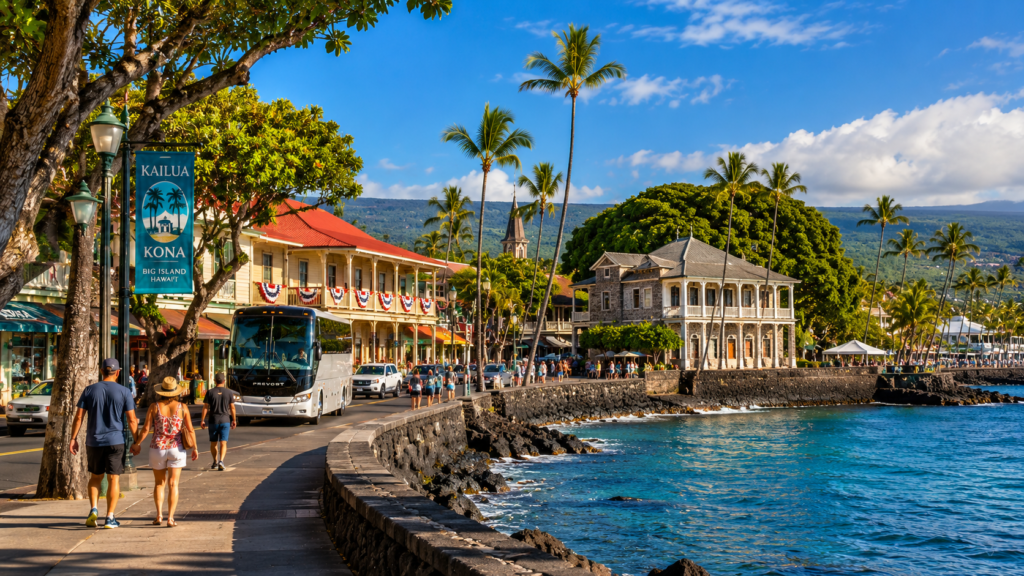
How to Plan On-Island Operations and Access for a Hawaii Group
Once a group is on the ground, the program lives or dies on the details tour brochures never mention: where a motorcoach can actually park, how long loading takes, and whether a venue can receive a group at all. Here is how to plan the on-island day.
For DMC, tour-operator, and group program planners · 8 min read · Updated July 2026
Reviewed by Conway Kaka, Founder
10+ years coordinating Hawaiʻi group logistics
Updated August 7, 2026
Key Takeaways
On-island operations are the daily logistics that turn an itinerary into a program that actually runs: motorcoach parking and staging at each stop, realistic load-and-go timing, venue and attraction access for a group’s size, and the buffers that keep a full day from collapsing when one stop runs long. An itinerary lists where a group goes; on-island operations decide whether it can get there, park, unload, be received, and move on. Plan each stop for access and staging, build the day around real transition times, and keep a coordinator between the schedule and the vehicles. A DMC turns a sequence of destinations into a day that holds together on the ground.
Why an Itinerary Is Not an Operating Plan
A group itinerary reads like a plan: beach in the morning, lunch at noon, a cultural site in the afternoon, dinner at a venue. What it does not show is whether a 50-passenger motorcoach can park at the beach access, whether the restaurant can seat the whole group at once or needs two seatings, whether the cultural site allows a group of that size and requires advance arrangement, and how long it actually takes to load fifty people back onto a coach after lunch. Those are on-island operations — the difference between a schedule on paper and a day that runs. Most of what goes wrong with a group day is not the destinations; it is the access, the staging, and the transitions between them. Planning the on-island day means planning those.
Access and Staging at Each Stop
Every stop on a group day has an access question and a staging question, and both have to be answered before the day is set. Access is whether the group can be received at all: can the venue seat, admit, or accommodate a group of this size, does it require advance arrangement, and are there restrictions on group vehicles at the site. Staging is the physical reality of the vehicle: where a motorcoach can legally stop, whether it can wait or must drop and return, and how far the group walks from the vehicle to the door. These are the same access and staging conditions a group first meets at the airport curb during airport transfers, extended to every stop on the itinerary. A stop that looks simple on paper — a scenic overlook, a popular restaurant — can be the one where a coach has nowhere to park and the group ends up walking a half mile or the vehicle ends up circling.
Operational Tip
Walk the day as the vehicle, not as the traveler. For each stop, ask where the coach actually stops, how long it can stay, and how far the group walks from door to door. If any traveler has a mobility or pace-and-rest need, that walk and that timing change — plan the stop around it and confirm the site can accommodate it; see accessibility-aware group travel planning. Site access features vary and should be verified before the day is finalized.
Timing, Transitions, and the Day That Holds
The hidden cost in a group day is transition time, and it is almost always underestimated. Loading and unloading a large group is not instant: fifty people boarding a coach, settling, and counting off takes real minutes at every stop, and those minutes multiply across a full day. A day planned as if transitions were free runs late by mid-morning and collapses by afternoon, pushing dinner, stranding a reservation, or cutting the last stop entirely. The fix is to build the day around honest transition times and protect it with buffers, so one stop running long does not take the rest of the day with it. The table below shows where on-island time actually goes and where a day tends to break.
Where an on-island group day breaks
| On-island element | What it really takes | Where the day breaks |
|---|---|---|
| Load & unload | Real minutes per stop for a large group | Planned as instant; the day drifts late |
| Venue access | Advance arrangement for group size | Group arrives somewhere that cannot receive it |
| Vehicle staging | A legal place to stop and wait | Coach circles or parks far from the door |
| Meals | One seating or two for the group size | Reservation cannot seat everyone at once |
| Buffers | Slack between stops for overruns | No slack; one late stop cascades |
Coordination That Holds the Day Together
On-island operations only hold when someone is coordinating them in real time. A group day has moving parts — vehicles, drivers, venues, meal times, and the group itself — and a plan on paper does not adjust itself when a stop runs long or a venue is slow to receive the group. A ground coordinator sits between the schedule and the vehicles, keeping the day on its timeline, calling ahead to the next stop, and absorbing the small overruns before they compound. This is the same coordination that runs the multi-island transfer day when the group changes islands, and it depends on the group being where the plan expects — which starts with a clean arrival and a hotel that can receive the group. The on-island day is where all of that either pays off or falls apart, and it is the part a DMC is built to hold.
On-island operations checklist
- For each stop, confirm the venue can receive a group of this size, with advance arrangement where required.
- Confirm where the motorcoach can legally stage, and whether it can wait or must drop and return.
- Map the walk from vehicle to door at every stop.
- Build honest load-and-unload times into the schedule for a large group.
- Plan meals for one seating or two, matched to the group size.
- Protect the day with buffers so one long stop does not cascade.
- Confirm any mobility, pace, or rest needs and plan the stops around them.
- Keep a ground coordinator between the schedule and the vehicles.
How AGT Runs On-Island Operations in Practice
These are not hypotheticals. On-island coordination sits inside AGT’s documented group programs.
Related AGT Services & Programs
Hawaii Group Program Coordination
End-to-end coordination of a group’s on-island program, day by day.
Hawaii Group Tour & Activity Coordination
Venue access, activity booking, and staging for group-size touring.
Planning a Full On-Island Program?
Tell us your itinerary and your group size, and AGT will make each day run on the ground.
Frequently Asked Questions
What do “on-island operations” actually mean?
They are the daily logistics that make an itinerary run: where vehicles can stage at each stop, how long loading and unloading really takes, whether each venue can receive a group of that size, and the buffers that keep the day on schedule. An itinerary lists the destinations; on-island operations get the group to them, parked, received, and moving on.
Why is transition time so easy to underestimate for a group?
Because loading and unloading a large group is not instant, and the minutes multiply across a full day. Fifty people boarding, settling, and counting off takes real time at every stop. A day planned as if transitions were free runs late by mid-morning, so honest transition times and buffers are built in from the start.
What is the difference between an itinerary and an operating plan?
An itinerary is the sequence of destinations. An operating plan adds the access and staging at each stop, the real load-and-go timing, the meal seatings, and the buffers — everything that decides whether the group can actually reach each place, be received, and stay on schedule. The itinerary is the what; the operating plan is the how.
How do you handle a stop where a motorcoach cannot park?
You plan around it before the day. Either a legal staging point is identified nearby with a mapped walk to the door, or the vehicle drops the group and returns at a set time, or the stop is adjusted. What does not work is discovering it on the day, when the coach ends up circling or the group walks a half mile it did not expect.
Do venues and attractions need advance arrangement for a group?
Often yes. Many venues, restaurants, and attractions need advance arrangement to receive a group of a given size — seating in one or two settings, group admission, or vehicle access at the site. Confirming this before the day is set is part of on-island planning; a stop that cannot receive the group is found in planning, not on arrival.
Can a DMC run the on-island day, not just the transfers?
Yes. A DMC runs the on-island day — the access, the staging, the timing, and the real-time coordination between the schedule and the vehicles — not just the airport transfers. It is the part of the program that turns a sequence of destinations into a day that holds together on the ground.

ABOUT THE AUTHOR
Conway Kaka
Founder, Aloha Group Travel
10+ years coordinating Hawaiʻi group logistics across Oʻahu, Maui, Kauaʻi, Kona, and Hilo — airport transfers and meet-and-assist, Pearl Harbor and cruise programs, hotel coordination, and multi-island itineraries. He personally reviews AGT’s planning resources to reflect how programs actually run on the ground in Hawaiʻi.
Related Resources
How to Plan a Multi-Island Transfer Day
How to Plan Group Airport Transfers in Hawaii
How to Plan a Group Hotel Room Block and Rooming List
Need Your On-Island Program Coordinated?
Tell us your islands, your itinerary, and your group size, and AGT will run the ground — access, staging, timing, and the coordination that holds each day together.
Call Us +1 (808) 232-1229