Home › Resources › Group Travel › Planning Dining & Evening Events for a Large Group
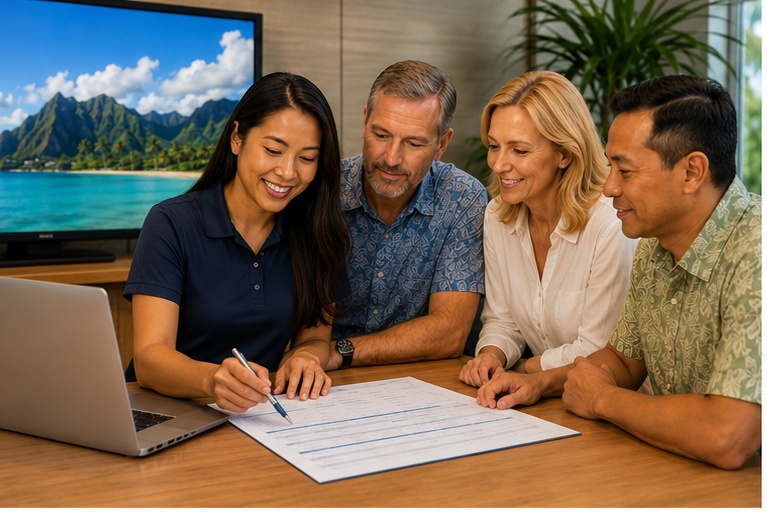
How to Plan Dining and Evening Events for a Large Group in Hawaii
Feeding and entertaining a large group is a logistics problem dressed as hospitality. Here is how to plan Hawaii dinners, luaus, and evening events that land on time, seat everyone, and feel effortless.
For corporate, incentive, and group planners · 8 min read · Updated July 2026
Reviewed by Conway Kaka, Founder
10+ years coordinating Hawaiʻi group logistics
Updated August 7, 2026
Key Takeaways
- Group dining is where a program’s evenings are won — and where they quietly break. A restaurant that seats forty cannot take two hundred; an evening event has transportation, timing, dietary needs, and a headcount all resolving at once; and a private luau or venue buyout is a full production with its own load-in and run of show. Plan dining around what venues can actually accommodate the group, coordinate transportation and timing so people arrive together and on schedule, handle dietary needs and counts in advance, and treat a buyout as an event, not a reservation. A DMC coordinates venues, transportation, and vendors so evenings feel effortless instead of improvised.
The Part of the Day That Isn’t Optional
What Large-Group Dining and Evening Events Involve
Group dining is a capacity problem before it is a culinary one. The first question is never ‘is the food good’ but ‘can this venue actually take the group’ — seat it together, serve it in the time available, and handle its dietary needs at that scale. From there it becomes a coordination problem: getting the group to the venue on transportation, arriving on a timed schedule so the kitchen is ready, seating a large party without a bottleneck, and settling a group bill cleanly. Evening events add production on top — a private dinner, an awards banquet, a luau, or a full venue buyout each carry their own setup, timing, and vendor coordination. The thread through all of it is that a large group cannot be treated like a big reservation; it has to be treated like an operation, planned against real venue capacity and delivered on a schedule.
Operational Tip
Confirm true seated capacity and group-service capability before you fall in love with a venue — not the marketing capacity, the number it can actually seat and serve together in your time window. Most group dining failures trace back to a venue that was never able to take the group in the first place.
Choosing Formats: Dinners, Dine-Arounds, and Buyouts
Large groups have more than one way to handle an evening, and the right format depends on the group and the goal. A single-venue group dinner keeps everyone together and is simplest to coordinate, but needs a venue that can genuinely seat the whole group. A dine-around splits the group across several restaurants — good for a large program where no single venue fits, or where guests value choice, but it multiplies the coordination. A private event or venue buyout gives a group its own space and program — a beachfront reception, an awards dinner, a private luau — and delivers the most control and the biggest impression, at the cost of being a full production. The table below maps the formats to when each fits. A local operator matches the format to the group, the venues, and the transportation reality.
Choosing a group evening format
| Format | Best for | What it requires |
|---|---|---|
| Single-venue group dinner | Keeping the whole group together | A venue that seats and serves the group at once |
| Dine-around | Large groups; guests who value choice | Multiple venues, split transport, coordinated timing |
| Awards / banquet dinner | Recognition and business content | Function space, A/V, staging, banquet coordination |
| Private luau / cultural show | A signature Hawaii evening | Venue or buyout, entertainment, catering, transport |
| Full venue buyout | Exclusivity and a custom program | Load-in, run of show, vendors, full production |
On-the-Ground Logistics: Transport, Timing, Dietary, Headcount
The evening lives or dies on the same logistics as the rest of the program, compressed into a few hours. Transportation has to move the whole group to the venue and back — staged, timed, and matched to the group size, with a plan for a dine-around’s multiple drop points. Timing has to be tight in both directions: arrive too early and the venue is not ready, too late and the kitchen and any entertainment fall behind. Dietary needs and allergies have to be collected and communicated to the venue in advance, at a scale where ‘we’ll sort it at the table’ does not work. The headcount has to be accurate, because catering and seating are built on it — the same count that drives the room block and rooming list — and a private event or buyout adds vendor coordination, setup, and a run of show. A ground operator owns the venue relationships, the transportation, and the timing, and holds a reachable contact through the event so a problem gets solved before the group notices.
Group dining & evening event checklist
- Confirm true seated capacity and group-service capability for each venue.
- Match the format (single venue, dine-around, buyout) to the group and goal.
- Stage transportation to and from the venue; plan dine-around drop points.
- Set arrival timing so the venue and kitchen are ready.
- Collect dietary needs and allergies in advance; communicate to the venue.
- Confirm the accurate headcount for catering and seating.
- For a buyout or private event, coordinate vendors, setup, and run of show.
- Plan group billing and settlement in advance.
- Keep a reachable contact through the event.
How AGT Handles Group Events in Practice
These are not hypotheticals. Group dining and evening events sit inside AGT’s documented program operations across the Hawaiian islands.
Related AGT Services & Programs
Incentive Meetings & Banquets
Group dining, awards banquets, and events coordinated across venues.
Planning Dining or an Evening Event for a Group?
Tell us your group size, your dates, and the kind of evening you want, and AGT will scope the venues and logistics.
Frequently Asked Questions
What makes large-group dining different from a normal reservation?
Scale. A venue that seats a couple beautifully may not be able to seat, serve, and move a group of a hundred and fifty in the time the program allows. Large-group dining has to be planned against real venue capacity, with transportation, timing, dietary needs, and an accurate headcount all coordinated — it is an operation, not a reservation.
What is a dine-around?
A dine-around splits a large group across several restaurants on the same evening, rather than seating everyone in one venue. It suits large programs where no single venue fits, or where guests value choice, but it multiplies coordination — multiple venues, split transportation, and timing that has to line up across all of them.
What is involved in a private luau or venue buyout?
A buyout gives the group exclusive use of a venue and its own program — catering, entertainment, and setup built for that group. It delivers the most control and the biggest impression, but it is a full production: load-in, a run of show, vendor coordination, transportation, and a headcount the catering is built on. It is planned like an event, not booked like a table.
How do you handle dietary needs for a large group?
They are collected in advance and communicated to the venue before the event, not sorted at the table. At group scale, allergies and dietary restrictions have to be counted and planned into the catering, so the kitchen is prepared and no guest is left without an option.
How important is transportation to a group dinner?
It is often the difference between an evening that runs on time and one that does not. The whole group has to arrive together and on schedule so the venue is ready, and leave together at the end — staged, timed transportation, with drop points planned for a dine-around. Timing the transport to the venue is part of planning the meal.
Can a DMC coordinate group dining and evening events?
Yes. A DMC matches the format to the group, secures venues that can actually accommodate it, coordinates the transportation and timing, handles dietary needs and headcounts, and for a private event or buyout manages the vendors and run of show — so the evening feels effortless and lands on schedule.
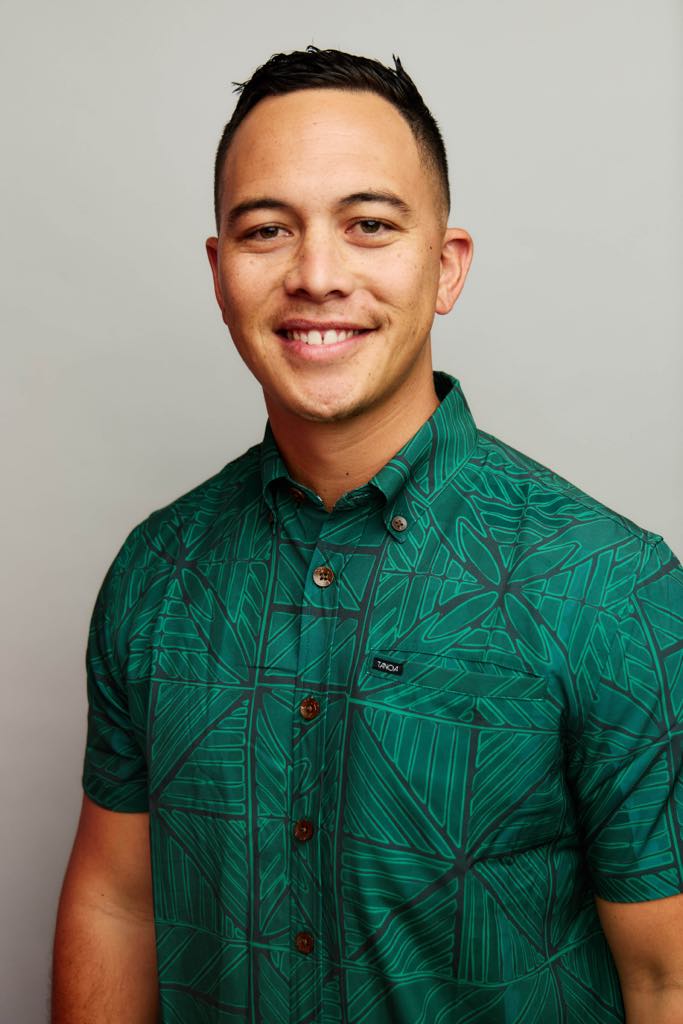
ABOUT THE AUTHOR
Conway Kaka
Founder, Aloha Group Travel
10+ years coordinating Hawaiʻi group logistics across Oʻahu, Maui, Kauaʻi, Kona, and Hilo — airport transfers and meet-and-assist, Pearl Harbor and cruise programs, hotel coordination, and multi-island itineraries. He personally reviews AGT’s planning resources to reflect how programs actually run on the ground in Hawaiʻi.
Related Resources
How to Plan a Corporate Incentive Trip to Hawaii
Planning Evenings for a Hawaii Group Program?
Tell us your group, your dates, and the experience you want, and AGT will handle the venues, transportation, and event logistics.
Call Us +1 (808) 232-1229