Home › Resources › Corporate Incentive Travel › Planning a Corporate Incentive Trip to Hawaii
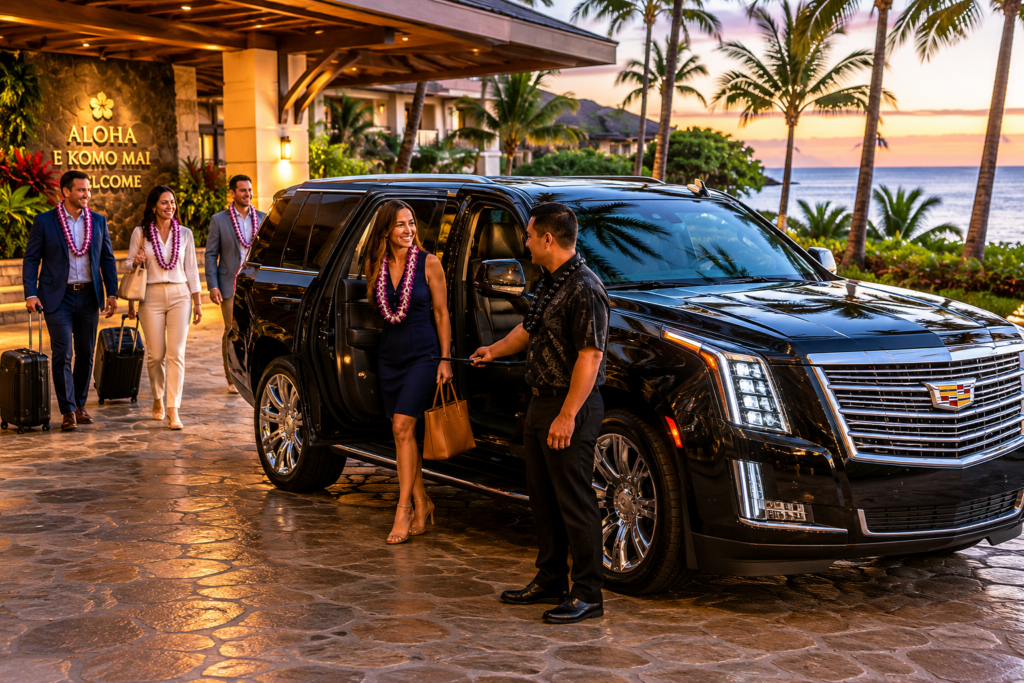
How to Plan a Corporate Incentive Trip to Hawaii
An incentive trip is a reward that represents the company — so it is judged by details most group trips never touch. Here is how to plan a Hawaii incentive program that delivers the experience without the operation showing.
For corporate, incentive-house, and meeting planners · 9 min read · Updated July 2026
Reviewed by Conway Kaka, Founder
10+ years coordinating Hawaiʻi group logistics
Updated August 7, 2026
Key Takeaways
- An incentive trip is different from an ordinary group program because it is a reward: it represents the company to its best people, expectations are high, and the operation is supposed to be invisible. That raises the bar on arrival experience, private events, VIP transportation, dining, and the small amenities that signal care — all held to a per-guest budget and a schedule that must feel effortless. Design the program around the guest experience, build in redundancy so nothing visibly fails, and coordinate every partner to a single standard. A DMC runs the ground so the host company gets the credit and the guests never see the machinery.
The Trip That Has to Look Effortless
Most group programs succeed if they run on time. An incentive trip has to do that and more: it has to feel effortless, look generous, and reflect well on the company that awarded it. These are a company’s top performers, and the trip is a thank-you with the organization’s name on it — which means a missed transfer or a mediocre dinner does not just inconvenience a guest, it lands on the brand. That standard is what separates incentive planning from ordinary group travel. The logistics are similar; the tolerance for visible failure is near zero. Everything that would be merely annoying on another trip — a coach that runs late, a venue that underwhelms, a welcome that feels generic — is a problem here, and the whole craft is making a complex operation disappear behind a seamless guest experience.
Planning a working offsite rather than a reward trip? A retreat is built around a working agenda, not recognition — see our guide on how to plan a corporate retreat in Hawaii.
What Makes an Incentive Trip Different
An incentive trip is a reward program, not a tour. Its purpose is recognition — motivating and thanking a company’s highest performers — and that purpose sets the standard for everything operational. Guests arrive expecting to be looked after, not managed; the experience is meant to feel exclusive, personal, and generous, because it stands in for the company’s appreciation. Practically, that shows up in the details: a warm, organized arrival rather than a scrum at the curb; private or semi-private events instead of off-the-shelf group activities; transportation that feels like hospitality rather than a shuttle; and small amenities — a welcome gift, a room drop, a personal touch — that signal the guest matters. None of it is accidental. It is designed, budgeted per guest, and delivered to a consistent standard across the whole group, which is exactly where the operational difficulty lives.
Operational Tip
Decide the per-guest experience standard first, then design to it. An incentive budget is usually expressed per head, and every decision — venue, vehicle, gift, meal — either meets that standard for everyone or it does not. Consistency across the group matters more than a single showpiece moment.
Designing the Guest Experience
The guest-facing program is where an incentive trip earns its reputation, and it is built from a handful of high-touch moments. The arrival sets the tone: guests met and moved smoothly from plane to hotel, without the friction that signals a group in transit. Private events — a beachfront reception, an exclusive dinner, a venue buyout — give the trip its signature moments and are the pieces guests remember. Dining is elevated beyond the ordinary group meal, often with dine-around options or a marquee event. Transportation is treated as part of the experience, not just a means of moving people. And if the program includes a business element — an awards banquet, a brief meeting — it is staged to the same standard as the rest. The table below maps the guest-facing elements to what each one requires operationally.
Guest-facing elements and what they require
| Guest-facing element | What it delivers | What it requires operationally |
|---|---|---|
| Arrival experience | The first impression; sets the tone | Met arrivals, staged transport, expedited flow |
| Private events / buyouts | The trip’s signature moments | Venue partners, exclusivity, timing, backup plan |
| Elevated dining | A sense of generosity and care | Restaurant partners, group seating, dietary handling |
| VIP transportation | Hospitality, not just movement | Quality vehicles, dispatch, on-time reliability |
| Awards banquet / meeting | Recognition and business content | Venue, staging, A/V, banquet coordination |
| Amenities and gifting | The personal touch | Sourcing, room drops, per-guest consistency |
Delivering It: The Logistics Behind an Effortless Trip
Behind every effortless incentive trip is an operation built for redundancy. Because visible failure is unacceptable, the planning assumes things will go wrong and makes sure guests never see it: backup vehicles, contingency venues for weather, a reachable ground team, and staff who can absorb a problem without it reaching the guest. Room blocks are coordinated so arrival is seamless and rooms are ready; transportation is scheduled with margin so no one waits; events are confirmed with fallback options; and every partner — hotel, venue, restaurant, transportation, activity — is briefed to the same standard so the experience is consistent whichever guest you follow. This is the part the host company is really buying: not a list of activities, but the assurance that a complex program will run cleanly in front of the people who matter most to them. A local operator who has run incentive programs before builds that redundancy in as a matter of course.
Corporate incentive planning checklist
- Set the per-guest experience standard and budget first; design to it.
- Plan a met, staged arrival experience — not a curbside scrum.
- Lock signature private events or buyouts early; secure venue partners.
- Coordinate the room block for a seamless arrival and ready rooms.
- Schedule VIP transportation with margin and backup vehicles.
- Build weather and venue contingencies for every outdoor element.
- Handle dining, dietary needs, and amenities to a consistent standard.
- Confirm a reachable ground team empowered to absorb problems invisibly.
How AGT Handles Incentive Programs in Practice
These are not hypotheticals. Incentive programs sit inside AGT’s documented corporate operations on the Hawaiian islands.
Related AGT Services & Programs
Planning an Incentive Program in Hawaii?
Tell us your group, your budget per guest, and your dates, and AGT will design the experience and run the ground.
Frequently Asked Questions
What is a corporate incentive trip?
It is a reward program — travel awarded to a company’s top performers to recognize and motivate them. Unlike an ordinary group tour, its purpose is recognition, so the standard is a generous, personal, seemingly effortless experience that reflects well on the host company. That purpose shapes every operational decision.
How is planning an incentive trip different from a regular group trip?
The logistics are similar but the tolerance for visible failure is near zero. Because the trip represents the company to its best people, the arrival, events, dining, and transportation are all elevated and held to a consistent per-guest standard, and the operation is built with redundancy so guests never see a problem.
How are incentive budgets usually structured?
Typically per guest. That per-head figure sets the standard for every element — venue, vehicle, dining, gifting — and the discipline is delivering that standard consistently across the whole group rather than spending it all on a single showpiece. A DMC helps translate the per-guest budget into a program that feels generous throughout.
What makes the arrival experience so important?
It is the first impression, and on an incentive trip first impressions carry weight. Guests met and moved smoothly from plane to hotel feel looked after; a curbside scrum signals a group in transit and undercuts the reward. A staged, met arrival is one of the highest-leverage details in the whole program.
How do you make sure nothing goes visibly wrong?
Redundancy. Backup vehicles, contingency venues for weather, a reachable ground team empowered to absorb problems, and every partner briefed to the same standard. The operation is designed on the assumption that something will go wrong and the guest should never see it — which is exactly what the host company is paying for.
Can a DMC run a full incentive program?
Yes. A DMC designs the guest experience, coordinates the hotel block, private events, dining, transportation, and any banquet or meeting element, and runs the ground with redundancy built in — so the host company gets the credit and the guests never see the machinery underneath.

ABOUT THE AUTHOR
Conway Kaka
Founder, Aloha Group Travel
10+ years coordinating Hawaiʻi group logistics across Oʻahu, Maui, Kauaʻi, Kona, and Hilo — airport transfers and meet-and-assist, Pearl Harbor and cruise programs, hotel coordination, and multi-island itineraries. He personally reviews AGT’s planning resources to reflect how programs actually run on the ground in Hawaiʻi.
Related Resources
Planning a Corporate Incentive Program in Hawaii?
Tell us your group, your budget per guest, and your dates, and AGT will design the experience and handle the Hawaii ground — arrival, events, dining, and VIP transportation.
Call Us +1 (808) 232-1229